


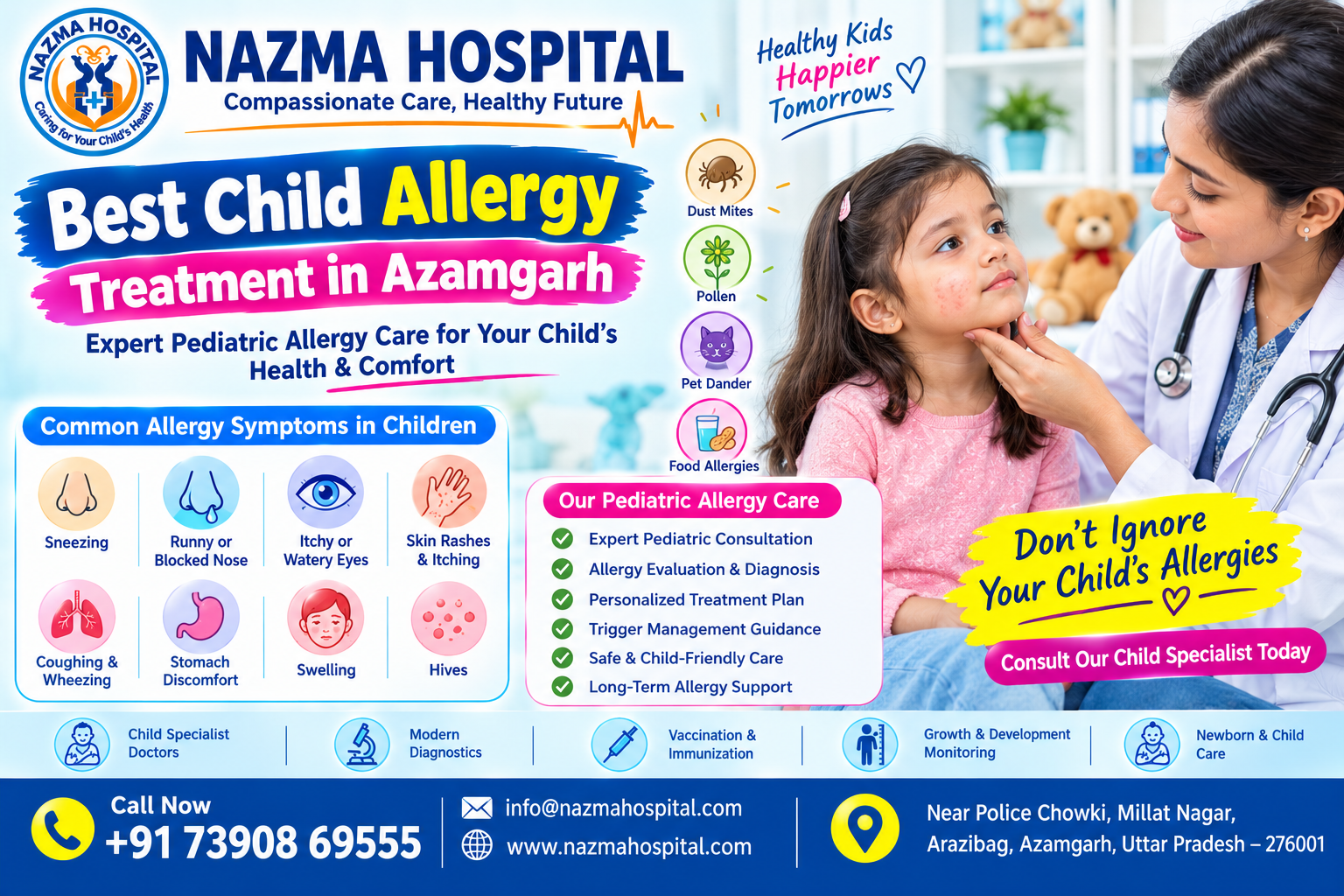
Best Child Allergy Treatment in Azamgarh – Expert Pediatric Allergy Care at Nazma Hospital
Allergies are common among children and can affect the skin, nose, eyes, respiratory system, or digestive system. Symptoms may be triggered by dust, pollen, certain foods, insects, medicines, pets, or other environmental factors.
If you are searching for the Best Child Allergy Treatment in Azamgarh, Nazma Hospital provides pediatric consultation and child healthcare services to help evaluate allergy-related symptoms and provide appropriate medical guidance.
What Is an Allergy in Children?
An allergy occurs when the immune system reacts to a substance that is usually harmless to most people. The substance that triggers the reaction is called an allergen.
Common allergens can include:
- Dust and dust mites
- Pollen
- Pet dander
- Certain foods
- Insect bites or stings
- Some medicines
- Mold
- Environmental irritants
Allergic reactions can differ significantly from one child to another.
Common Allergy Symptoms in Children
Parents may notice different symptoms depending on the type of allergy.
Common symptoms include:
- Sneezing
- Runny or blocked nose
- Itchy or watery eyes
- Skin itching
- Redness or rashes
- Hives
- Coughing
- Wheezing
- Swelling
- Stomach discomfort
- Vomiting or diarrhea after certain foods
Persistent or recurring symptoms should be discussed with a pediatric healthcare professional.
Types of Allergies in Children
Respiratory Allergies
Respiratory allergies can cause symptoms such as sneezing, nasal congestion, runny nose, coughing, or wheezing. Dust, pollen, mold, and other environmental allergens can sometimes trigger symptoms.
Food Allergies
Some children may develop allergic reactions after eating certain foods. Symptoms can include skin reactions, vomiting, stomach problems, swelling, or breathing difficulties.
Parents should seek medical advice if a child repeatedly develops symptoms after consuming a particular food.
Skin Allergies
Children can experience skin reactions such as itching, redness, rashes, or hives. Several factors may contribute to these symptoms, including allergies and skin conditions.
Seasonal Allergies
Some children experience allergy symptoms during particular seasons due to changes in pollen and other environmental allergens.
When Should Parents Take Their Child to a Doctor?
Parents should consider pediatric consultation when allergy symptoms are frequent, persistent, severe, or affecting the child’s daily activities.
A medical evaluation may be appropriate if a child has:
- Repeated allergic reactions
- Persistent skin rashes
- Frequent sneezing or nasal congestion
- Recurrent coughing or wheezing
- Reactions after eating certain foods
- Swelling
- Sleep disturbance due to allergy symptoms
- Symptoms that are becoming more frequent
A pediatric healthcare professional can evaluate the child’s symptoms and medical history and determine whether further assessment is needed.
Pediatric Allergy Evaluation in Azamgarh
At Nazma Hospital, pediatric consultation can help evaluate children with suspected allergy-related symptoms.
During an evaluation, the doctor may consider:
- The child’s age
- Symptoms and their duration
- Previous allergic reactions
- Possible triggers
- Food history
- Environmental exposure
- Medical history
- Family history
- Physical examination
If required, the healthcare professional may recommend additional investigations or referral for specialized allergy testing.
Child Allergy Treatment Depends on the Cause
There is no single treatment that is appropriate for every childhood allergy. Management depends on the child’s symptoms, age, trigger, severity, and medical history.
Treatment may involve:
- Avoiding identified triggers
- Prescribed medicines
- Skin care for certain allergic skin conditions
- Management of respiratory symptoms
- Dietary guidance for suspected food allergies
- Follow-up with a pediatric healthcare professional
Parents should not give medicines to children without appropriate medical advice.
How Parents Can Reduce Allergy Triggers
If a particular allergen has been identified, reducing exposure may help minimize symptoms.
Parents can consider:
- Keeping children’s rooms clean
- Reducing dust accumulation
- Avoiding cigarette smoke
- Washing bedding regularly
- Keeping the home adequately ventilated
- Avoiding known food triggers
- Following the doctor’s recommendations
- Keeping a record of recurring reactions
The appropriate precautions depend on the child’s specific allergy.
Food Allergy in Children
Food allergies require particular attention because reactions can range from mild to severe.
Parents should discuss recurring food-related reactions with a pediatric healthcare professional rather than unnecessarily eliminating multiple foods from a child’s diet.
If a child develops symptoms after eating a particular food, parents can note:
- What the child ate
- How much was consumed
- When symptoms started
- What symptoms appeared
- Whether similar reactions happened previously
This information can be useful during a medical consultation.
Allergy and Childhood Asthma
Some children with allergies may also experience respiratory symptoms such as coughing or wheezing. Allergens can trigger symptoms in children who have asthma or other respiratory sensitivities.
If a child repeatedly experiences coughing, wheezing, or breathing difficulty after exposure to dust, pollen, pets, or other triggers, pediatric evaluation may be appropriate.
Allergy Care for Babies and Young Children
Allergy symptoms in babies and young children can sometimes be difficult to identify. Parents should pay attention to changes in:
- Feeding
- Skin
- Breathing
- Sleep
- Bowel habits
- Behaviour
If a baby develops significant swelling, breathing difficulty, repeated vomiting, or other concerning symptoms, prompt medical attention is important.
Why Choose Nazma Hospital for Child Allergy Care?
Parents searching for the Best Child Allergy Treatment in Azamgarh may look for a hospital that provides comprehensive pediatric healthcare.
Nazma Hospital offers services including:
- Pediatric consultation
- Child health checkups
- Pediatric diagnostics
- Newborn care
- Vaccination and immunization
- Growth and development monitoring
- Pediatric emergency support
- Medical advice for children
These services support children’s healthcare needs at different stages of childhood.
When Is an Allergic Reaction an Emergency?
Some allergic reactions can become serious very quickly.
Seek immediate emergency medical care if a child develops:
- Difficulty breathing
- Severe wheezing
- Swelling of the tongue or throat
- Difficulty swallowing
- Fainting or severe weakness
- Bluish or pale skin
- A rapidly worsening allergic reaction
A severe allergic reaction can be life-threatening and requires urgent medical treatment.
Conclusion
Childhood allergies can affect a child’s comfort, sleep, school activities, and overall wellbeing. Identifying possible triggers and receiving appropriate pediatric medical guidance can help parents manage recurring allergy symptoms.
If you are searching for the Best Child Allergy Treatment in Azamgarh, Nazma Hospital provides pediatric consultation, child health checkups, diagnostics, newborn care, vaccination, growth monitoring, and pediatric emergency support.
Contact Nazma Hospital
Phone: +91 73908 69555
Email: info@nazmahospital.com
Address: Near Police Chowki, Millat Nagar, Arazibag, Azamgarh, Uttar Pradesh – 276001
For pediatric consultation and child healthcare enquiries, contact Nazma Hospital at +91 73908 69555.
Frequently Asked Questions
What are common allergy symptoms in children?
Common symptoms include sneezing, runny nose, itchy eyes, skin rashes, itching, hives, coughing, wheezing, and sometimes digestive symptoms.
What causes allergies in children?
Common triggers include dust, pollen, pet dander, certain foods, insects, medicines, mold, and other environmental allergens.
How is a child’s allergy treated?
Treatment depends on the cause and severity. It may include avoiding known triggers and using medicines or other treatments prescribed by a healthcare professional.
Should I give allergy medicine to my child?
Parents should consult a pediatric healthcare professional before giving medicines to children, particularly young children.
Can allergies cause breathing problems?
Certain allergies can trigger respiratory symptoms such as coughing or wheezing. Breathing difficulty should be evaluated promptly by a healthcare professional.
Where can I get child allergy care in Azamgarh?
Nazma Hospital provides pediatric consultation and child healthcare services in Azamgarh, including evaluation and management of allergy-related concerns.


